|
There’s nothing like the thrill of your first published book or getting a publishing contract to make you feel like you’re on top of the world. The excitement and adrenaline rush from accomplishing a dream goal are hypnotic until after the book is out in the world. Maybe faced with mediocre reviews, being dropped by a publisher or agent—it’s part of the business, and it’s hard. So hard. Writing is an art, and art is subjective. How many times has an author heard this reminder when things aren’t going as planned? It doesn’t matter what level of success is achieved; negativity hovers like a bad Odam. Whatever step in publishing an author is experiencing, there are times when it feels like an accomplishment is not enough. It doesn’t matter how many books are sold or how many good reviews one has, it’s an on-going struggle. Best-selling rom-com author Meredith Schorr says that for her, feeling like her level of accomplishment is not enough stems from not having another book contract right now. “While drafting my work-in-progress, it's challenging to push down the doubts that I won't get another deal because of my sales track, not being a good enough writer, etc. It feels a bit like starting over.” She added that imposter syndrome is real, telling herself her earlier books were a fluke or that she just got lucky. It’s hard to feel self-doubt. It’s art, and it’s personal, especially when there have been accomplishments. Fantasy and romance author, Shameez Patel ( Papathanasiou ) says, “social media makes it far too easy to compare our struggles with the wins we see posted on Instagram, etc. It's impossible to know how many late nights were spent crying, or how many rejections other authors received, when all you see are their accolades being posted. It's easy to feel as though you're the only one who is struggling. Added to that is the fast-paced industry where the goal posts keep moving, and days after your novel is published, it feels like old news and time to write the next best-seller.” When this happens, one can feel like they’re not enough. It’s hard to feel validated and move past the negative thoughts. Tracy Wideman, a Registered Clinical Counsellor (RCC) and Certified Canadian Counsellor (CCC) with a private practice in Vancouver, BC, says, “It is very human to feel not enough. Often, a part of us holds strong opinions and interpretations about our worth. It helps to humanize that part and to understand it within the broader systems that benefit from us feeling inadequate.” She explains that a helpful practice is to personify it. “To give form to the character that carries these extreme thoughts and digs into your worthiness. Often this is a self-critical voice with a well-intended strategy: to protect another part of you that fears being exposed as an imposter. You can speak to it directly and say, I see how concerned you are about me being good enough. That makes sense…you’re trying to push me forward and protect me.” When an artist feels this way, Wideman says to let that dominant character know it doesn’t need to carry this concern on its own. “Rather than being led by an overriding voice, we can practise a kind of inner democracy by listening to other parts of ourselves that soften extreme opinions and open us to creative possibilities.” Rejections are part of the publishing business. It happens in every stage of the publishing process. When a story you’ve poured your energy and love into doesn’t get the agent or the publisher, it’s hard not feel like a failure. The more rejections a writer gets can play heavily on the mind and lead to self-doubt, especially when it’s recurring. Schorr agrees and says, “For most of us, rejections do come before goals are achieved, but they don't stop there. Most authors don't sell that first book and then have smooth sailing for the rest of their publishing careers. The self-doubt doesn't go away when you sell your first book because there are trade reviews, reader reviews, sales, new book contracts to think about, and when things don't go your way, it can be soul-crushing!” It’s tough to share your art because there’s always going to be negative reactions. “Writing is incredibly personal, and thicker skin is developed over the years, it's still hard to accept that something you love with all your heart may not be appreciated by others,” says Patel. “I think self-doubt plays heavily on any artist's mind, not only authors. Reading, and most art, is subjective. There is no way to ensure your work is "good" because there is no standard for what is good. There will be doubt.” And when there’s doubt, Schorr says she tries to kill her demons from the inside out by focusing on the joy of writing, or they will always be there. “It's the only thing in my control,” she says. “I also try not to focus on what I deem a "failure" in the past and, instead, focus on what happens next and the steps I need to get to the next level. If I want to publish another book, I need to write it! I also try not to compare myself to others, but that is a daily struggle.” Creatives will experience self-doubt. It’s art. It’s a personal creation that is shared with others. “It's impossible to avoid self-doubt entirely,” says Patel. “Especially during the drafting process when you're finding the story and figuring out what works. Slowly, as it grows and gets polished, you become sure of what you've written and why you want it out in the world. In my case, I lean on my author-friends who are willing to hype me up and remind me of everything I've achieved thus far. It's essential, in my opinion, to find your cheerleaders.” So, how can someone feel good about themselves when art is subjective? Wideman says, “Feeling good can come from many sources. It’s worth pausing to notice what you are giving power to when it comes to your sense of goodness. Art’s subjectivity invites us to root our sense of goodness not in external approval or consensus, but in a reflective relationship with our values and their impact.” Wideman suggests building on the idea of responsiveness. “You might ask: Is there an inner tuning fork that feels aligned with your art-making? Or is your work primarily in service to external sources of validation, like the systems that tell you what is in or out? These systems often uphold a privileged status quo that bypasses deeper questions of meaning, responsibility, and whose voices are being amplified or left out.” There’s a level of joy in making art and seeing the end result; however, the experience can bring mixed emotions. “Sometimes you feel good, and sometimes you feel really awful,” says Wideman. “When we focus only on art as a final product, we miss what the process itself offers to the life of the artist. And in the end, even if your art isn’t “good,” you are still okay.” Working on self-doubt, Schorr says it’s important to enjoy the writing process. “Make sure you're passionate about what you're writing, even while keeping the market in mind. No matter what happens with a book, you don't want to look back on the months you spent writing it and recall hating every second. I've had books die on submission or not get green-lit by my agent, but because I loved almost every second of the writing process, it wasn't time wasted.” Success can be measured in different ways. Some might say money, material things, or prominence in the world. How can someone measure their own success? Wideman says, “It is understandable that we desire validation. It can feel deeply affirming when we have access to systems that reward us, when things line up, and success is mirrored back to us. But when they don’t, we may find we’ve handed the outside world the authority to determine our value on the inside.” Wideman explains that if we allow the final judge of whether we are successful or not, we give away our power to something that was never designed to hold our humanity. She suggests a writer may ask: How am I responding to my life with awareness? Am I taking responsibility for the stories I choose to tell and how I tell them? Am I listening to what wants to be expressed through my writing, rather than only to what is most likely to be rewarded? How do I feel about how I’ve responded to the creative call of my life? Answering these questions, Wideman says, “When success is measured this way, it becomes less dependent on external validation, which often privileges particular versions of creativity over others. Even if the world has not deemed you successful by its standards, you still have your inner compass: your values, choices, freedom, and awareness. From that place of orientation, you’re not proving your worth -- you’re living from it.” Allowing your art to be shared is a beautiful gift. It’s an expression, it’s a deep yearning to create something that means something special to you. If you choose to make and share your art, it’s an accomplishment. Patel says an author’s accomplishments are enough. “I understand that saying that doesn't change how you feel, but I'll say it anyway. If it's the best you can do, it's enough. Whether you're writing 200 words a day or 2000. It's your best, and your best will always be enough because writing isn't about anyone else. It's about you.” Tracy Wideman is a Registered Clinical Counsellor (RCC) and Certified Canadian Counsellor (CCC) with a private practice in Vancouver, BC. https://www.tracywideman.com/ Shameez Patel https://www.shameezwrites.com/ Her newest romcom, Next Level Love. When two people find out their online crushes are actually their IRL enemies, they must figure out a way to work with each other in this charming and geeky enemies-to-lovers romcom perfect for fans of Olivia Dade. Meredith Schorr, https://meredithschorr.com/ Room Mating, Sizzling chemistry and tender friendship develops between two accidental roommates in this hilarious rom-com. For fans of Lynn Painter and Falon Ballard.
0 Comments
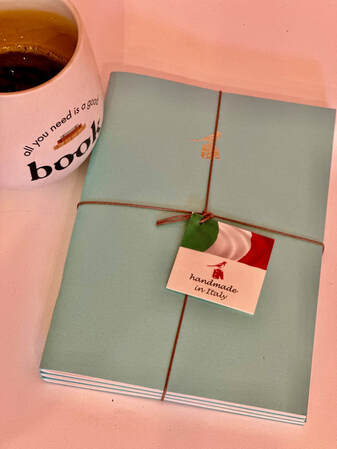
Seven Tips for Setting Goals Hello 2026! Every year, it’s the same deal: make resolutions, plan goals, and/or find a word to define your mindset for the next twelve months. The beginning of a new year is also a defining time to make a change. A time to acknowledge and be self-aware of what we need for self-improvement. If you need help setting your new year’s goals, you’re not alone. In December, I didn’t reach a few of my goals. It wasn’t from a lack of trying—getting an agent is partly out of my control— but I realized I had been so hopeful and working toward the one thing I really wanted that I neglected to acknowledge the good things I did with my time. The things that make me happy: I published two books, I discovered metal-stamping, and I’m succeeding on my fitness journey. To bring in the new year, I decided to reflect on the small victories, and I opened a bottle of Veuve Clicquot Brut to acknowledge my accomplishments. I was saving the bottle for a special time when signing with an agent or landing a publishing contract was worthy of raising a glass. The bottle was gifted to me years ago, and I couldn’t bring myself to open it without a reason. A validated reason, one that could be life changing. If I had kept it, it would soon expire, and then I’d miss out on the luxury of enjoying such a fine bottle. If you have good intentions to create new goals or to use your word to define the year, planning and writing it down is a good start to make change. Acknowledging what you want helps create a positive mindset. You’ve heard of SMART goals, right? Specific, Measurable, Attainable, Realistic, and Time-bound. Be specific about what you want to achieve. If you need help to set your goals, here are some tips for successful goal setting: Get an Agenda There’s nothing that sparks my creativity more than having new stationery. Pretty pens, pencils, and paper with designs and colourful sticky notes bring joy to the page and the mind. Reading it daily reminds you of the path you’re on. Further reading on the benefits of agendas, click here. Write it down. Whether you use an agenda or a desk calendar, write down your task. It’s why to-do lists work. You write it down, check it off when it’s complete, and there’s a feeling of accomplishment. It also makes you accountable for your actions. For example, if you need to write a novel by a certain date, work backwards on a calendar, so you know how many words you need to write daily to achieve the goal. Track your progress At the end of the day, make sure you’re accomplishing your goal at a pace that works for you. It’s easy to keep adding to the to-dos, but if it’s hard to change a schedule or the amount of work is too much, adjust the goal. It’s better to have a smaller goal and tick it off your list than stress and not accomplish anything. Good attitude Making realistic goals is key. As an author, I’ve had ups and downs, but what I’ve learned is that you can’t control other people’s opinions and decisions. Getting an agent or a publishing contract is hard. Selling a manuscript can take months or years, and even if it gets picked up, there’s no guarantee how well it might do when it's published. It’s always the unknown, and as much as one can work toward the goal, it’s all about timing and a little luck. So, when rejection becomes common, the one thing you don’t have to lose is attitude. Staying positive will help motivate you to keep on going and maybe try something new. You’re not alone
Surround yourself with people who are rooting for you. It might be one person, or five. It doesn’t matter. Having a cheerleader in your life who wants to hear the good and the bad will keep you going. Let’s face it, writing is a lonely profession, so keeping in touch with those who are supportive and who are cheering for you even when you’re losing hope. Find a hobby Creative people love dreaming up new ideas. When a story isn’t coming together, doing something else for distraction when you're disappointed or unfocused helps. It will help motivate and can even trigger new ideas. Do you ever go for a walk, and something will pop into your mind you weren’t even thinking about? When you’re stuck on ideas and allow yourself to relax, it gives you the time to think without effort. Reward You don’t have to buy something or toast a beverage to acknowledge your accomplishment; taking a moment to reflect on your goal brings a sense of pride. Enjoy a cup of tea, call a friend, or read a new story. Do whatever brings you happiness in your day. Let’s move into the new year with hope, positive thinking and hard work to reach those goals. Acknowledge your accomplishments and celebrate the small victories. It’s the perfect time. * Opinions are my own It’s not just self-care; it’s self-care with holiday vibes. If December has you stressed, there’s no better time than to focus on your health during the holidays. Staying physically healthy is one thing, but we also need to stay mentally strong to get us through the late nights, the extra socializing, family gatherings, and indulging in more goodies than usual. This is where festive self-care comes in. We all need to take time for ourselves, whether it’s five minutes or twenty. Taking a moment to enjoy a cup of coffee, sitting down to read a chapter of a book, or calling a friend will give you the break you need. If you want to explore self-care further, some might suggest treating yourself to a small indulgence for the sake of self-care. Bestselling romance author Jennifer Shirk posted on Instagram recently that buying books is a form of festive self-care. How perfect is that? It doesn’t matter if it’s a peppermint latte or a new mug; everyone’s perspective is different. Self-care means something unique to everyone. Add a little festive cheer to your book buying (a holiday romance, anyone?) or get fingernails painted like candy canes like Olivia’s in my book, The Twelve Gifts of Christmas—and you’ve got some festive self-care! Whatever your self-care routine is, or if you’re looking to change it up, making time to do something you love is key. Take the time to indulge in a hobby or work on a puzzle, read a blog post, or bake some cookies. Whatever you find comforting is a great way to enjoy 'you' time.
This past year, I’ve written and published two romance books, revised two new books, and learned how to metal stamp. It’s given me the creative space I need from writing when my story isn’t flowing the way I want it to, or I can’t get the words down, and I’m stuck on a plot. Being creative can lead to so many other outlets. It’s just a matter of exploration and allowing the freedom to enjoy. It doesn’t mean you have to be an expert; it means you are enjoying your time and you’re open to relaxation. Whether it’s painting, gardening, knitting, or cooking—it’s an art, and when you have constant sparks of inspiration and an imagination, you find a place you’re most comfortable. During the holiday season, get comfortable with your art and support it with good sleep, eating nutritious foods, sipping water throughout the day, and exercising. Doing what you enjoy is the best refresher and pairing it with a good health routine is something you can feel good about. Christmas is one of my favourite holidays. I love the gatherings, the comfort foods and seasonal treats- pumpkin pie, anyone? The way my children’s faces light up when they see someone they love or open a gift they’ll treasure. The pure joy and anticipation become a live wire, and I’m here for it. Knowing it’s a limited time for celebrating, cramming all the to-dos—visiting friends, attending sports games and parties, into a few weeks is what adds to the excitement.
It’s what got me thinking about writing a holiday romance. I wanted to write a story with mystery, time constraints, and make it as sweet as butter tarts. Stir it together for a quick read and you’ve got yourself a holiday novella. The Twelve Gifts of Christmas is not just for the sweet romance; it’s for the kindness and joy of giving I wanted to portray. I love featuring characters with heart and humour. I hope you enjoy Olivia Parker’s story. If you’re wondering, this character wasn’t created in a spur of the moment. Rewind, a year ago, Kobo had an open call for authors to submit their holiday romance novellas. I hadn’t written a holiday romance before but wanted it, so it was the perfect way to brainstorm and push myself to write something new. I started plotting. It needed to be a Canadian setting, and I wanted to write about what I know, so I set it in Vancouver, BC. With the looming high cost of living, I knew it would be a good plot point. As it started with the heroine living in a shabby old apartment building. I wanted her to be jolly and grateful for what she has, even though she dreams of something more; she has hope. I asked the question: What would make a happy, hopeful person who loves Christmas more joyful? Giving, of course! I already knew my heroine, Oliva Parker, was a personal shopper and she loved buying and wrapping gifts, so what if she delivered a gift to a grumpy guy and was taken aback by his curtness and unrelatable personality? Once I started writing about Olivia’s gift delivery, I had to get her and Mr. Grumpy to keep meeting multiple times until they became friends. The letters were a sure way to keep them together. I considered making this story a full novel, but sometimes a quick read is all we can manage and still get the holiday romance vibe we’re craving. I hope you enjoy The Twelve Gifts of Christmas. Whatever your plans are this season, I hope it’s filled with good food, hope and the people you love. Happy Holidays! If you’re a country person at heart, hold on to your boots, because I’m going to gush over my recent trip to Austin, Texas. Before I give you highlights of a memorable five-day adventure, there’s a point I’m making. As a writer, we always hear, ‘write what you know.’ But it’s also fun to write what you want to learn about, as long as the facts are correct. When you read a book in a place you’re familiar with, it draws you in because you know the culture or the vibe of the location. A writer friend recently said she read a book and was disappointed the author wrote about a location she obviously wasn’t familiar with, a location this writer friend knows well. If you’re familiar with a setting, it’s easier to write about, but if not, it comes with possible criticism if you get a detail wrong, and a reader might not trust the author again. It's always fun visiting a new place. I’ve heard so much about Texas ( who hasn’t? ), it seems fitting to absorb the qualities and culture of a new city. If it wasn’t for some close friends inviting my husband and me to travel with them to the U.S, I don’t know when we would have gone. Politics aside, these two trips we went on were still, I’d say, the best ones we’ve been on. We have memories to share and once-in-a-lifetime experiences. Last year, my trip to Nashville was still one of my favourite trips, so when the opportunity to go to Austin, Texas, with the same group of friends arose, I knew it would be another great adventure. The thing is, when you travel with a small group of friends, you get bonding time. It allows you to relax, do things you may not have done on your own, and of course, there are plenty of laughs. Right there, it’s worth it. Our five-day retreat was jam-packed with entertainment. We attended the Austin City Music Festival, which brought in around 75,000 people. We were there to see Luke Combs, and he’s an outstanding performer every time. We went to a pitch and putt where the weather was hot, and the drinks were cold. One day, we went to Pins Mechanical Company. A place we should have here in Canada. It’s an old-school, family arcade/bar/games room, all rolled into one, suitable for families and their dogs. Yes, there were dogs hanging out too. With college football on the big screen, it’s a high-energy, entertainment facility. https://www.pinsbar.com/locations/austin/activities There are lots of restaurants to choose from, too, and what I appreciated the most was the vegetarian and gluten-free options. Most places we visited had a great menu with plenty of options. If you head to Sixth Street, where the nightlife is, you’ll find comedy shows and live music. Pete’s Dueling Pianos was a hit. So much fun! We were there for hours. I have to say, the people in Austin were kind, friendly, and the most welcoming people I have ever met on a trip. We felt welcome. If I ever have a book published with Nashville or Austin as the setting, you’ll know I’ve written from experience. Speaking of, I did write a book set in Seattle and Nashville; I just haven’t found a home for it yet. When I read my manuscript, it brings a smile to my face, and a wave of good memories overcomes me. It’s the great thing about writing. Reflecting, dreaming, and imagining the joys of a place you want to visit. Again. If Nashville or Austin is on your travel list, I recommend going with friends and a great-fitting pair of boots. You won’t be disappointed.
A Name to Reflect GenresIf you’re a creative person, chances are, you have a big imagination, and you’re a dreamer, like me. There's no shortage of creativity. If I'm not writing, reading, or baking, I'm honing my metal stamp creations. ( You can check it out at https://denijones.weebly.com/) Over the years, I’ve written several romance series and stand-alone books; however, not all of them have been published. I put some manuscripts aside so I could work on something else, but now and then, I revisit the stories I can't let go of and consider how I'll publish them. Whether it's through a literary agent, editor, or self-publishing, finding the right fit takes time. Recently, I was asked why I have two social media profiles with two different names. The short answer is, I don’t know how readers would feel about a first-person, twenty-five-year-old point of view. I know of authors who write contemporary romance and young adult using the same name, but I also know authors who write rom-com and contemporary romance using different pen names. I think it depends on the author's publishing journey. My Charlene Groome profile is about books, baking, fitness, and sometimes hockey. Deni Jones is used for my new adult books, pretty things like fresh flowers and my metal stamping projects. While I have these things I enjoy creating, it might be too much to file under one name, so I decided to create a new name, a name that is personal to me. It will be the name I use to publish my new adult stories and have a place for my metal stamping creations. If I'm writing a different genre, would readers care what author name is on the cover?
It's the question I continue to ask myself, but my conclusion is always the same: A second pen name feels right. There’s a renewed energy and excitement that comes from Deni Jones. I figure if I'm excited about it, maybe readers will be too. As these books are light with a touch of humour. As I go through my creative journey, I am reminded of the joy it gives me, regardless of what name I use. I am still me, embracing kindness, simple joys, family time, me time, and dreaming of the next big thing. It's Not Just a Love StorySometimes it’s a challenge coming up with a title, but for book two in my Moonlight Valley series, Recusing His Heart seemed fitting.
The overall series was created because I love the idea of best friends living in a small town and working toward their dreams. Each book features a woman from the circle of friends who is on a journey to find love and nurture their friendship. I wanted to make this an important part of the series. Celebrating each other and being there for each other wholeheartedly was my goal. You can tell a lot about someone by who they spend time with, so creating characters who have goals and motivation to follow their dreams sheds light on their personalities. Therefore, I created a group of friends whom I decided needed their own stories to find love. The second book, Rescuing His Heart, Sara Quinn is a journalist working for the town’s newspaper, covering news from the town fair to minor accidents. It’s repetitive and boring. She’s ready for a change. She’s also ready to date again. The trouble is, she can’t find love, so she tries a dating app. Just when she’s making plans to travel to meet a guy she’s been connecting with, her boss needs her to be in charge while he deals with an urgent family matter. Just when life seems unfair, it gets challenging when she witnesses a plane crash. Her photojournalism skills kick in, and she runs toward the crash to help while also photographing the scene. As the pilot recovers in the hospital, Sara learns he’s Major Colton Brooks. She researches who he is and digs up his past, then publishes a story that exposes his emotional wounds, which he’s still healing from. As Sara prepares for a trip of a lifetime, Colton prepares to heal in a town with a future he thought was impossible. While I enjoy writing romance books, I love including friendships because they’re a part of our lives. Some of us have friends we can lean on and may have known each other forever. There are friends who are just there for the social, like a good neighbour. Whoever they are, they're a part of our circle, and it’s an important part of our lives. With each book I write, I want it to be more than a love story. I want it to be about family and friends, connecting lives, because ultimately, it’s what makes us who we are. Happy Reading! Charlene What Inspired Me To Write my Moonlight Valley seriesSummer.
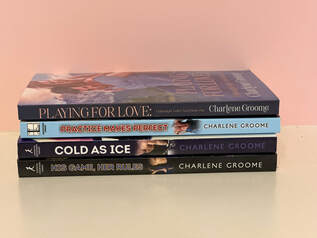
A popular time to escape whether it's a staycation or weekend getaway. It’s no wonder summer is pegged as the perfect time to read. Beach read, anyone? New places to visit, familiar hideaways or a favourite escape, whichever it is, I use my surroundings as an inspiration for future books. There’s truth in writing about something you know. When my kids were young, flying was undesirable, so my hubby and I would drive to the Okanagan and spend time in Osoyoos and Oliver. Located in British Columbia, close to the US border, it’s a desert in the summer months, offering beautiful lakes, mountain terrain, award-winning wineries, distilleries, breweries and fruit orchards is more than expected in a small-town. The quaint towns became our go-to, a familiar and homey place to visit. With all the fun rolled up into one exciting place, these towns have mastered big dreams for all it produces. It’s a place I love for its memories and setting. It’s what inspired me to write my Moonlight Valley series. One summer, while exploring Oliver, known as ‘Canada’s Wine Capital,’ I toured and did wine tasting along the main road. The stunning views of rolling hills, the acres of grape vines, peach and apple orchards, mountains, and Osoyoos Lake… is paradise. It has all the qualities of a small-town dream. My mind wandered about how these wineries came into existence, and as I learned, some had been in families for generations. What a great place to be inspired! Emily Hill, my heroine in, Playing For Love, is a proud winemaker wanting to carry out her passion and commitment of her family’s business, Cottage Hill’s Winery. However, when hit with financial troubles, she fears somebody might remove her family’s name if she can’t find the money to save it. She can’t fathom a future without her business, and when her old crush brings home the Stanley Cup to celebrate his win, she’s not just fighting for her career; she’s fighting the feelings that surface again when she sees Mason again. Keeping her financial troubles private, Emily resists help from the only man who has always had her heart. I hope you enjoy Moonlight Valley. What’s your favourite small town to visit? Let me know in the comments. Cheers! Charlene Some might think of celiac disease is eating gluten-free because their body can’t handle gluten, yes, but they may not realize the harmful consequences behind the disease.
When undiagnosed, it’s a battle to figure out what is causing a multitude of problems, but once they discover the issue, it comes as a relief, as there’s a reason for the recurring symptoms. I have three children with celiac disease, and I, being gluten-sensitive ( although one doctor says it’s very likely I’m celiac), he warns me to follow a celiac diet or I could be faced with health issues down the road. According to celiac.org, those left untreated, the disease can lead to serious health problems such as cancer. https://celiac.org/about-celiac-disease/what-is-celiac-disease/ So, what is celiac disease? It’s an autoimmune disease where the symptoms are triggered by gluten resulting in inflammation and damage to the small intestine. The result is a reduced absorption of iron, calcium, Vitamins A, D, E, K and folate. In my son’s case, he also was low on zinc resulting in extreme cracked lips that weren’t cured by prescriptions, lip balms or Vaseline. Did you know 1 in 100-200 people in North America have celiac disease, but many are undiagnosed? – https://www.canada.ca/en/health-canada/services/food-nutrition/reports-publications/food-safety/celiac-disease-gluten-connection.html Celiac disease symptoms can be different for some people. While I have one child who experiences severe stomach pains, another gets skin rashes and headaches. Of course there are other symptoms that present themselves from the disease, there are many! https://www.celiac.ca/gluten-related-disorders/celiac-disease/ Living with Celiac Disease can be stressful when socializing because one is always worried if their food will be contaminated by gluten. it’s a constant concern of cross contamination when dining out. A kitchen needs to be clean without gluten particles getting into gluten-free food which means, no sharing ovens with gluten and nothing can touch for fear of one gluten particle can inflame the small intestine. It might sound crazy to some that just a particle of wheat, barley, rye, spelt or Kamut can cause damage to a celiac person’s small intestine, but according to nationalceliac.org, it takes just a crumb, or 10 mg. https://nationalceliac.org/celiac-disease-questions/can-a-small-amount-of-gluten-make-somebody-sick/?srsltid=AfmBOopf50unZwzkedgkZlYtJWFC19megjkPajBCXsw6mSWxKBuJlAAK Celiac disease isn’t just about being gluten-free, it’s a major health concern and one that shouldn’t be taken lightly. If Health Canada reports that over 400,000 people are living with celiac in Canada, it’s something to spread awareness about. https://www.canada.ca/en/health-canada/news/2022/05/message-from-the-minister-of-health--food-allergy-and-celiac-awareness-months.html **This post is my opinion and have gathered additional information from the links provided. |
AuthorCharlene Groome Archives
February 2026
Categories
All
|


RSS Feed